 EN
 English
 中文简体
 Français
 Español
 Latine
 عربى
Guardrail and entrapment geometry
Rail height, gap dimensions and the distance between components are the areas most commonly checked. Small dimensional errors are the reason products fail testing, not structural design.

Content
Bunk beds have become one of the more revealing corners of the global furniture market. Ask buyers what changed over the past three years and the answers rarely start with design. They start with floor space, freight cost, and the simple fact that people are sleeping in smaller rooms than they were a decade ago.
That is the backdrop for this 2026 industry analysis. Instead of treating the bunk bed as a children's furniture niche, it makes more sense to read it as a compact sleeping system that now crosses age groups, price tiers and building types, from a shared bedroom in a city apartment to a hostel dormitory, a student residence, a staff block or a short-stay rental. The product changed because the room changed.
We come at this from the foam side. Cixi Tiansheng Sponge Products has been making polyurethane and memory foam since 1996, and our mattresses, pillows and compressed foam products end up inside exactly this kind of furniture. From where we sit, the most under-discussed part of the bunk bed conversation is the foam core sitting under the mattress cover. It is the component most likely to be complained about, returned or replaced within the first two years, and the one most often specified at the last minute.
What follows is a structured look at the trends shaping the global bunk bed market in 2026: the demand forces behind the category, the design and material specifications buyers now ask for, regional differences, safety and compliance expectations, freight and compression economics, and what all of it means for the people sourcing, making and selling these products.
Bunk bed demand did not change overnight. It changed in steps, and each step added another layer to what buyers expect from a frame and from the mattress that goes inside it.
Solid pine and powder-coated steel dominated. Two-tier frames were sold mainly through regional furniture retailers, and purchasing decisions were driven by family size rather than floor area. The mattress was usually an afterthought, often the thinnest foam slab that would physically fit inside the guardrail.
Container rates and unpredictable lead times forced importers to look hard at how much air they were shipping. Self-assembly furniture became normal for a much wider group of shoppers, and home improvement absorbed a large share of discretionary spending. Flat packaging moved from a nice-to-have to a commercial requirement.
Rising rents and smaller urban units pushed the bunk bed out of the nursery. Adult-scale bunk and loft beds, student accommodation, staff housing, hostels and short-term rentals all added volume. The language of the category shifted from "kids' bunk" to "space-saving sleep system", and the buyer profile widened considerably.
Buyers started asking about foam density, emissions, textile labelling and end-of-life options. Memory foam and high-resilience foam appeared in bunk-size mattresses rather than only in adult beds. Importers began requesting third-party test documentation instead of accepting a price list and a photograph.
Differentiation now sits in stability, silence, storage integration, mattress-fit specifications and packaging density. The market has separated into three visible tiers: value imports, mid-market branded systems, and design-led statement pieces. Suppliers that can document foam performance and compression ratios are winning specification conversations.
The through-line is simple. Every step pushed the category closer to mainstream furniture expectations: predictable quality, documented compliance, and a sleep experience that does not need to be apologised for.
Six forces explain most of what is happening in this category right now. They overlap, and in some markets three or four of them pull in the same direction at the same time.
This is the strongest single driver. Apartments are getting smaller in most major cities while households stay roughly the same size, and every square metre has to work harder. A bunk configuration turns one room into two sleeping zones without expanding the footprint, which is why the product now appears in adult apartments, not just children's rooms.
When household budgets tighten, furniture that solves two problems at once wins attention. A bunk bed buys sleeping capacity at a lower cost per bed than two singles, which keeps the value tier of the market resilient even when premium furniture slows down.
Hostels, student residences, staff accommodation and short-stay rentals buy in volume and replace on a cycle. They prioritise durability, easy cleaning, stackable specifications and a mattress that can be swapped quickly without tools.
Online retail rewards products that ship flat, weigh less per carton, and can be assembled with one tool in under an hour. Packaging density is now a marketing asset as much as a logistics one.
Bunk beds used to be excused from comfort standards. That excuse is gone. Guests, students and teenagers compare the sleep they get upstairs with the sleep they get in a normal bed, and they write reviews about the difference.
Low-emission foam, recyclable steel, repairable fittings and clearer material labelling are moving from marketing language into procurement criteria. In several markets, buyers now ask suppliers to demonstrate that foam and textiles meet defined emission limits before a sample is even requested. Circularity is still early in this category, but repairability and replaceable mattress components are the two ideas gaining real traction.
Taken together, these forces explain why the category is no longer seasonal or purely child-focused. They also explain why material decisions made at the foam factory now show up in retail reviews written by someone sleeping in a student flat.
Design conversations in 2026 are remarkably practical. Buyers are not asking for novelty for its own sake; they are asking for configurations that survive daily use, ship efficiently, and photograph clearly in an online listing.
Powder-coated steel paired with wood or engineered panels remains the fastest-growing construction. Steel carries the load and keeps the frame slim; wood or laminate softens the visual weight and gives the product a furniture feel rather than an industrial one.
Longer and wider sleeping platforms, higher weight ratings and taller clearance under the lower bunk are now standard requests. The same frame geometry serves a teenager, a university student and a short-stay guest.
Bunk-to-sofa conversions, pull-out trundles and loft beds with a desk underneath are the three most requested modular formats. They let one purchase cover more than one life stage, which matters to buyers who move frequently.
Staircases that double as drawer stacks, headboard shelving and under-bed boxes are being designed in at the drawing stage rather than added as accessories. Storage integration is a strong differentiator in small-apartment markets.
Noise is the most common complaint in product reviews of the category. Rubber or felt isolation pads, tighter joint tolerances and fewer metal-on-metal contact points are inexpensive fixes with a disproportionate effect on customer satisfaction.
Buyers increasingly publish a maximum mattress thickness for the upper bunk. A mattress that sits above the guardrail defeats the rail, and a mattress that is too thin leaves a gap where a limb can become trapped. Fit is now part of the technical sheet.
Matte finishes dominate over gloss. Warm neutrals, deep plum, forest green and soft sand tones are replacing the primary colours that once defined the children's segment, signalling that the product is intended for adults too.
Flat cartons with tool-free hardware, numbered parts and a printed assembly sequence are consistently requested. Every centimetre removed from the carton shows up as container savings at the importer's end.
One design detail deserves its own paragraph. Upper bunks usually have less headroom than a standard bed, which makes the choice of pillow part of the specification rather than a personal preference. Lower-profile memory foam pillows keep the sleeper's head clear of the ceiling or the frame above while still supporting the neck, and that is a detail that shows up in reviews.
 Custom Soft Memory Foam Pillow for Bunk HeadroomLower-profile memory foam pillow for bunk beds, with customizable contour and firmness to support neck clearance and OEM/ODM programs.View Product →
It is a small point, but the categories that treat small points seriously are the ones holding their conversion rates while competing on price elsewhere.
Regional demand has less to do with culture and more to do with housing stock, rental structure and how furniture reaches the end customer. The table below summarises the pattern we see for the year ahead.
| Region | Main demand driver | Specification emphasis | 2026 outlook |
|---|---|---|---|
| North America | Replacement demand plus small-space urban living and e-commerce | Weight capacity, tool-free assembly, mattress-in-a-box compatibility | Steady, with visible price pressure in the value tier |
| Europe | Compact housing, rental turnover and strict safety enforcement | Bunk standard compliance, low-emission materials, test documentation | Moderate growth driven by compliance-based differentiation |
| Asia-Pacific | Urbanisation, dense housing and a very large manufacturing base | Cost efficiency, durability, high-volume production consistency | The fastest-moving region for both demand and supply |
| Latin America | Young households and multi-generational living arrangements | Robust steel frames and affordable mattress bundles | Growing but highly price-sensitive |
| Middle East and Africa | Staff accommodation, hospitality projects and rental housing | Heat and humidity resistance, easy maintenance and cleaning | Project-led and uneven from market to market |
| Global e-commerce channel | Cross-border listings and marketplace logistics | Flat pack, light cartons, clear assembly instructions | Rising share of total category sales across all regions |
Two practical conclusions follow from this picture. First, a single specification rarely travels well: humidity resistance sells in one region while low-emission documentation decides the order in another. Second, the channel matters as much as the region, because a product designed for a marketplace listing has different constraints from one designed for a project tender.
A bunk bed frame is typically bought once every several years. The mattress inside it is replaced far more often, and it is the component most likely to generate the review that either supports or damages a listing. When a guest, student or teenager complains about a bunk bed, they are usually complaining about the foam.
Three technical choices carry most of the weight in a bunk mattress. The first is foam density, which determines how long the mattress keeps its shape under a sleeper who uses it every night. The second is hardness or compression load deflection, which decides whether the mattress feels supportive or simply soft. The third is resilience, the property that lets the foam spring back after pressure is removed instead of developing a permanent hollow.
Above those sits architecture. A solid slab of high-resilience foam performs differently from a layered build that places firmer foam at the base and a softer comfort layer on top. For bunk applications, ventilation matters more than it does in a standard bed, because the mattress often sits on a solid platform with limited airflow underneath. Perforated foam, breathable covers and moisture-wicking ticking address that problem directly, and they are inexpensive upgrades compared with the cost of a returned product.
Custom Solid Memory Foam Mattress with Layered CoreLayered coil-free foam mattress with high-density support and slow-rebound memory foam; customizable firmness and breathable covers suit bunk and export programs.View Product →
There is also an age dimension. Bunk beds used by infants or very young children require firmer, dimensionally stable foam with carefully controlled emissions and no loose fills. That is a different technical brief from a mattress intended for a university residence, and the two should not be specified with the same document.
Finally, foam recovery behaviour matters commercially. A mattress that is compressed for shipping must return to its intended thickness and firmness within a predictable time after unboxing. If it recovers unevenly, the customer blames the mattress, the retailer blames the supplier, and the whole listing suffers.
Bunk beds sell on space efficiency, so it is consistent that the materials inside them are increasingly judged the same way. Vacuum compression is now the default delivery format for foam mattresses, and for good reason: it addresses the largest single cost in cross-border furniture trade, which is the volume of air being moved.
The logic applies beyond mattresses. Compressed foam seating, sofa beds and modular foam pieces follow the same principle: reduce volume at the factory, recover the shape at the customer's home. We have explained the mechanics of this in more detail in our breakdown of how vacuum compression reduces shipping volume, and the same trade-offs apply to any foam product that travels long distances.
For a bunk bed business, compression changes four things at once. It cuts container cost per unit, because more finished goods fit into the same space. It reduces warehouse footprint, which matters for retailers holding seasonal stock. It lowers last-mile delivery friction, since a rolled mattress is far easier to carry up stairs than a rigid one. And it creates a packaging format that suits online retail, where the parcel is the point of sale.
Compression is not free of trade-offs. Very high compression ratios can affect recovery time, and foam grades differ in how gracefully they return to shape. A mattress that has been compressed too aggressively for too long may need several days to reach full thickness, which is a poor first impression. The practical answer is to define a compression window that matches the shipping route and the retail environment rather than pushing for the smallest possible carton.
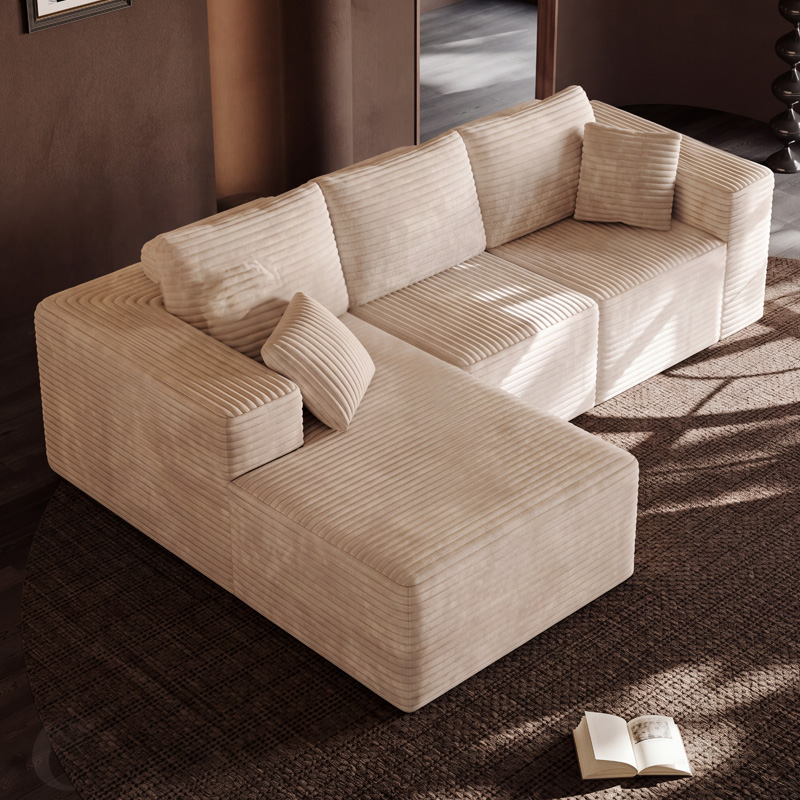
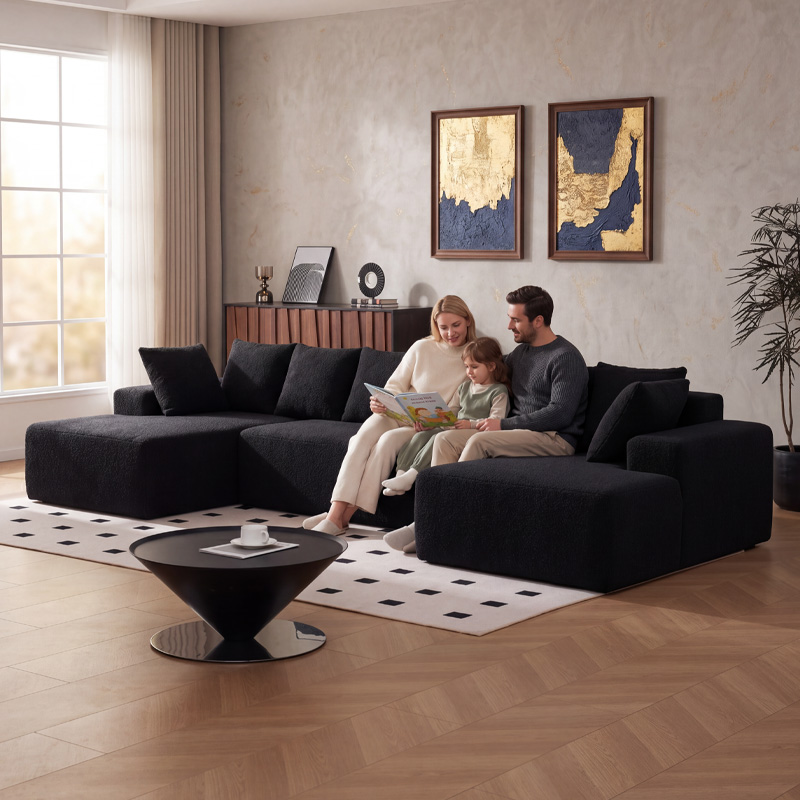
 Vacuum-Compressed Quick-Assembly Three-Seater Sponge SofaVacuum-compressed full-sponge sofa expands for one-minute assembly, offering flat shipping and segmented support for compact apartments and wholesale projects.View Product →
The same compressed-foam thinking shows up in the seating side of compact homes, where bunk sleeping and space-saving seating often share the same room. Products engineered to be assembled quickly and shipped flat now compete with traditional upholstered furniture on logistics as much as on price.
Compliance is the least glamorous part of this market and the fastest way to lose a shipment. Six items appear repeatedly in buyer requirements for the year ahead.
Rail height, gap dimensions and the distance between components are the areas most commonly checked. Small dimensional errors are the reason products fail testing, not structural design.
The mattress must sit below the upper guardrail and fill the frame without leaving a trapping gap. Publishing a maximum thickness protects both the customer and the brand.
Repeated load testing, corner stability and resistance to lateral movement are standard expectations, particularly for institutional buyers who replace furniture on a fixed cycle.
Foam and textile emission limits, restrictions on certain flame retardants and limits on formaldehyde are the criteria most likely to differ between destination markets.
Foam grade, filling composition, care instructions and origin marking need to match the technical file. Mismatches between label and specification cause costly delays at inspection.
Third-party test reports, batch references and material declarations are now part of the standard purchasing pack rather than a request made only when a problem appears.
From a foam manufacturer's perspective, the useful habit is to treat compliance as a design input from the first sample. Selecting a foam grade that already meets the intended market's emission limits is far cheaper than reformulating after a failed test.
The same market looks different depending on which side of the purchase order you sit on. Here is how we would frame the year ahead for each.
The gap between these two lists is where most friction in the category lives. Closing it is mostly a matter of documentation and consistency rather than dramatic technical breakthroughs.
The global bunk bed market in 2026 is best described as normalised. It is no longer a novelty category lifted by a single trend, and it is no longer confined to children's bedrooms. It is a compact sleeping solution that responds to housing density, institutional demand and online retail economics, and it is judged by the same standards as any other piece of furniture.
For foam manufacturers, that normalisation is good news. It means the material decisions that determine comfort, durability and shipping cost now sit in the specification document rather than at the end of the conversation. Buyers who get that right see fewer returns, better reviews and steadier repeat orders.
If you are working through a bunk bed or compact furniture project and need to pin down foam density, resilience, thickness or compression format, feel free to talk to our team about foam specification. We have been foaming polyurethane and memory foam since 1996, and we are happy to work through the trade-offs with you rather than simply quote a number.
Both are happening at once. Demand is shifting toward dense urban markets, rental housing and institutional accommodation, while established markets are mostly replacing existing stock rather than adding new beds. The net effect is a category that looks stable in volume but has changed significantly in composition, specification and channel. Growth is concentrated in value and mid-market tiers, and in regions where housing is becoming more compact rather than less.
Because the guardrail on an upper bunk is only effective if the mattress sits below it. A mattress that is too thick raises the sleeping surface and effectively removes the protection the rail was designed to provide. A mattress that is too thin can leave a gap between the mattress edge and the frame, which creates an entrapment risk. Publishing a recommended thickness range is the simplest way to protect both the user and the brand.
It can be, with the right specification. Memory foam offers good pressure relief and works well in layered constructions where a firmer base provides support. The two cautions are heat retention and airflow, since bunk mattresses frequently sit on solid platforms with limited ventilation underneath. Perforated foam, breathable covers and careful layering address both issues. For infant use, a firmer and more dimensionally stable foam is generally the better choice.
It varies with foam grade, thickness and the compression window chosen. The general principle is that a large share of the original volume can be removed at the factory and the product recovers to its intended shape after unboxing. The important detail is not the maximum ratio you can achieve, but the ratio that still allows reliable recovery within a reasonable time. Compression that is too aggressive can slow recovery and create a poor first impression.
At minimum: foam density, hardness and resilience figures; a maximum thickness recommendation for the frame; emission and material declarations that match the destination market; a third-party test report; and a sample that has been compressed and shipped so recovery behaviour can be observed directly. Asking for these before the order is far less expensive than discovering a gap during inspection.
Yes, and it is one of the more durable changes in the category. Adult-scale bunk and loft beds show up in student housing, staff accommodation, short-stay rentals and small urban apartments. This segment tends to demand higher weight ratings, larger sleeping platforms, quieter construction and better mattress quality than the traditional children's market, which is precisely why material specification has become more important across the whole category.
Your email address will not be published. Required fields are marked *


 Zhejiang Base: No. 791 Zhangxin North Road, Xiaolin Industrial Park, Cixi City, Ningbo, China
Jiangxi Base: Chihu Industrial Park, Jiujiang County, Jiujiang City, Jiangxi Province, China
 +86-137-3611-4073
 1520942191@qq.com
Copyright © Cixi Tiansheng Sponge Products Co., Ltd. All Rights Reserved
OEM/ODM PU Foam Sponge Couch Manufacturers
